

My New Greatest Find
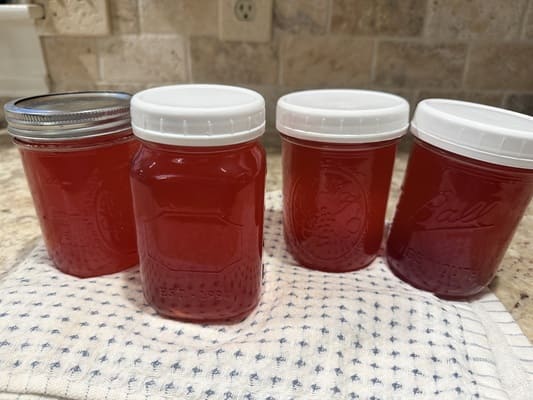
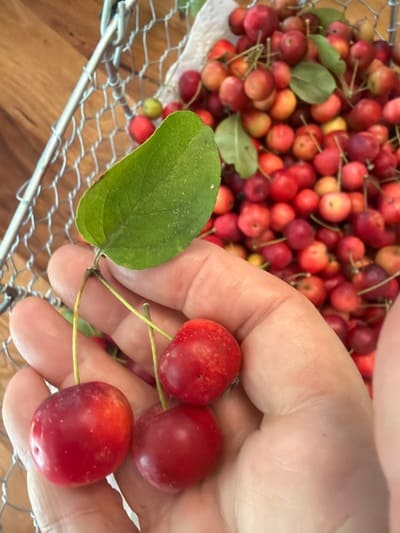 On my daily walks, I’m always scanning the contryside for goodies. I recently spied this wild crab apple tree loaded with fruit. Came back with a basket and boiled them down for jelly. It was so incredibly delicious, I went back to collect a second basket. Super easy to make. Just chop in half, toss in a pot with half as much water, and boil undisturbed for several minutes. When the apples fall apart, strain the juice and discard the pulp.
Because these have so much natural pectin, you don’t need a ton of sugar. I used 1: 1/2 ratio juice to sugar. Seems you do need more sugar to get it to set. What I was left with was this incredible-tasting syrup that I froze in cubes and have been enjoying as hot tea ever since. Hands down, this is our new favorite tea. I will be collecting lots more next season.
Wild Grapes!
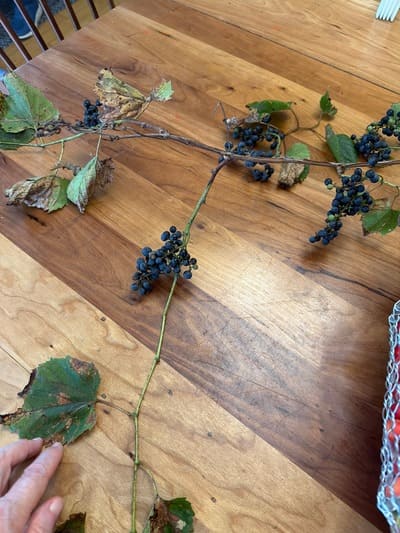 Noticed these wild grapes growing up some of our black locust trees. They’re pretty small but they’re supposed to make excellent jam. Seems many people actually prefer them to cultivated grapes because they have a stronger, more concentrated grape flavor. Like the crab apples, they contain natural pectin which helps the jam set.
How to make wild grape jam
For a small batch, start with about 4 pounds of wild grapes.
- Remove grapes from stems and wash thoroughly.
- Put them in a large pot with ½ cup water.
- Simmer 10–15 minutes until the grapes soften and release their juices.
- Run the cooked grapes through a food mill to remove seeds while retaining some pulp and skin.
- Add sugar to taste and cook until thickened. A tested recipe will specify sugar quantities and whether additional pectin is needed.
For shelf-stable jam, use a tested grape jam recipe and its specified boiling-water processing time. Refrigerate or freeze jam made with an improvised recipe.
One important safety precaution
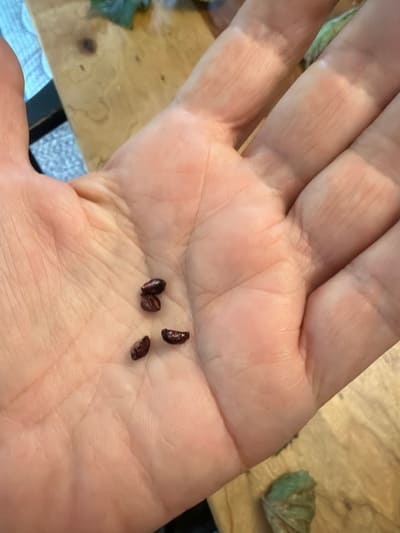
Make sure you’re harvesting actual wild grapes. Canadian moonseed, a poisonous look-alike found in the Northeast, has berries that resemble grapes. Moonseed typically has one flattened, crescent-shaped seed, while wild grapes have several pear-shaped seeds. Here you can see the wild grape seeds.
For canning, there’s a tested Concord grape jam recipe from South Dakota State University Extension and a tested wild grape jelly recipe from North Dakota State University Extension.
And Last but Not Least, What To Do With an Abundance of Asian Pears
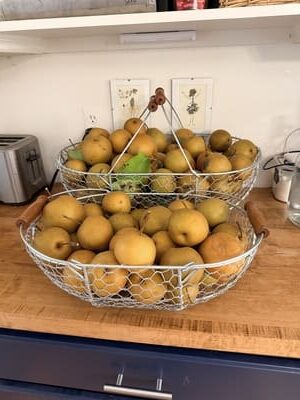
Let me see… Fruit leather. Check. Jelly. Check. Pear tarts. Check. Make dehydrated slices. Check. Live on Asian Pear slices and cheese for several days. Check. Give away to friends. Check.
And you still have this much left? Off to the local food pantry.
Related Posts: