

[From the Mailbag: Thanks to Jill and her new puppy, Drew, for this question.]
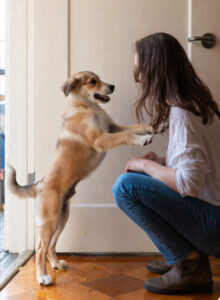 You walk through the front door after being gone for a few hours. Your dog races over, tail wagging so hard their whole body wiggles. They jump, lick your hands, and then… there’s a puddle on the floor.
The good news is this behavior is pretty common, especially in puppies. Even some adult dogs do it. In most cases, your dog isn’t having an accident on purpose. They simply can’t help it.
Excitement Urination
The most common reason is excitement.
Some dogs become so thrilled when they see someone they love that their bladder releases a little urine before they can control it. Think of it as their emotions temporarily overwhelming their body.
This happens most often in:
- Puppies whose bladder control is still developing
- Friendly, energetic dogs
- Dogs greeting family members after they’ve been away
Most puppies outgrow excitement urination as they mature and gain better bladder control.
Submissive Urination
Another common cause is submissive urination.
This is your dog’s way of communicating that they aren’t a threat. It’s a natural behavior rooted in canine body language.
A submissive dog may:
- Lower their body
- Roll onto their back
- Tuck their tail
- Avoid eye contact
- Leak a small amount of urine
This often happens when someone reaches over them, speaks loudly, or greets them enthusiastically.
It isn’t a sign that your dog is “guilty.” It’s just an instinctive response.
How to Help Your Dog Stop Peeing During Greetings
Fortunately, there are several simple ways to reduce these accidents.
Keep Greetings Calm
As hard as it is, avoid making a big fuss when you first arrive home.
Instead of immediately crouching down and showering your dog with attention, walk in quietly, hang up your coat, and wait a minute before greeting them.
Giving your dog a chance to settle down can make a big difference.
Take Them Outside First
If possible, greet your dog outdoors or let them outside immediately after you arrive.
An empty bladder leaves much less room for accidents.
Avoid Leaning Over Your Dog
Some dogs find direct eye contact, loud voices, and reaching over their heads intimidating.
Instead:
- Turn slightly sideways.
- Kneel rather than bend over them.
- Pet them under the chin or on the chest instead of patting the top of the head.
This helps nervous dogs feel more comfortable.
Reward Calm Behavior
When your dog greets you without urinating, reward that calm behavior with praise, treats, or affection.
Dogs repeat behaviors that earn good things.
Never Punish the Accident
This is perhaps the most important advice.
Scolding your dog for greeting-related urination usually makes the problem worse.
Remember, excitement and submissive urination are involuntary. Your dog isn’t choosing to pee on the floor.
Punishment can increase anxiety, which may actually lead to more accidents.
When Should You Be Concerned?
If an adult dog suddenly begins urinating during greetings after never doing so before, it’s worth talking with your veterinarian.
Medical conditions such as urinary tract infections, bladder problems, or incontinence can sometimes be mistaken for excitement urination.
You should also consult your vet if your dog:
- Has frequent accidents throughout the day
- Strains to urinate
- Has blood in the urine
- Drinks far more water than usual
- Seems uncomfortable while urinating
Greeting accidents can be frustrating, but they’re usually a normal stage of development or a sign of an especially sensitive dog.
With patience, calm greetings, and positive reinforcement, most puppies grow out of the behavior. Many adult dogs improve significantly once their confidence grows and greeting routines become less exciting.
In the meantime, keep a towel by the door, celebrate the dry greetings, and remember that your dog’s little puddle is often just another way of saying, “I’m so happy you’re home.”
Related Posts: