

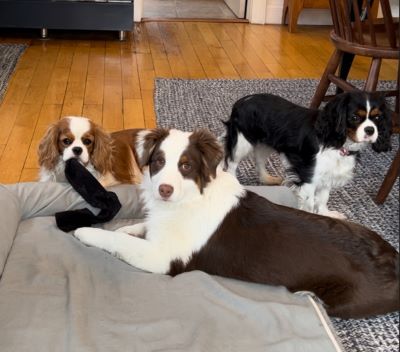
 My three dogs in this pack are an interesting bunch. To say the least… While most dogs do love walks, Arrow (our Aussie) will NOT leave the front yard if Riley and Kenzie (our Cavaliers) aren’t right out the door with him. And I mean no amount of pulling, coaxing, treating will get him to budge. Either they go or he doesn’t. Simple as that.
And then there’s Kenzie. She’s my tough girl. Until someone tests her, and then she runs behind Arrow. Which is actually pretty smart. But it would be smarter if she just didn’t pretend to be tough. What that looks like on a walk is that she’s ready to take on any person or dog that approaches us. Until we get close.
And Riley? Riley is my uncomplicated, perfect dog. And, no, I don’t have a favorite—I’m madly in love with all three! They crack me up and provide endless hours of joy and laughter. But getting all three out for walks every day is, well, something.
The truth is, some dogs find walks stressful or confusing rather than joyful. Once you understand why, you can help make life outside the front door feel safer or find other ways to give your dogs the exercise and stimulation they need. Okay, let’s break it down.
Why Walks Can Feel Hard for Some Dogs
Every dog experiences the world differently. What one dog breezes past — a skateboard, a loud truck, or a barking neighbor — might completely rattle another. Common triggers include other people and dogs, bicycles, garbage trucks, motorcycles, or even wildlife darting across the path.
Our job is to become a quiet observer. Watch your dog’s body language: a tucked tail, frozen stance, or sudden pulling toward home are signs the environment feels too intense. Recognizing these clues helps you build trust instead of frustration.
Helping a Nervous Dog Feel Safer
For a confident dog, walks are adventures. For a sensitive dog, they can be overwhelming. That’s where patience and predictability come in.
Trainers often talk about a dog’s threshold . That’s the point at which they go from calm and curious to reactive or fearful. Staying below that threshold is key. Keep enough distance from the things that make your dog uneasy. If they tense up or bark at something in the distance, calmly turn away or put some space between you and the trigger to protect your dog’s comfort zone.
Don’t Force It
It’s a common mistake to think that the more a dog is exposed to what scares them, the faster they’ll “get over it.” Unfortunately, flooding a dog with scary experiences — what trainers call trigger stacking — usually makes fear worse.
Instead, take a break from long walks. Focus on calm, short outings or yard time. This lets your dog decompress and builds a foundation for more positive experiences later.
Building Confidence Step by Step
When your dog is ready, gentle exposure paired with good things can work wonders. Start by showing them that scary sights or sounds predict treats, play, or praise. Over time, this changes their emotional response from “uh-oh” to “oh, something good is coming.”
Say your dog freezes near the dog park. Begin by walking at a distance where they can see it but remain relaxed. Reward that calmness. Only move closer when they stay easy and curious. This allows them to feel in control and reassured.
Keep Treats Handy and Routines Flexible
A pocketful of small, high-value treats is your best walking tool. Reward any calm attention or relaxed body language.
If certain routes or times of day are too much, change them up. People on our road time their walks to that all dogs can get their walks in without feeling challenged. I know maybe not all neighborhoods are this dog savy, but if you know the other walkers, you could suggest that you all set up a schedule. Early mornings or quiet side streets can transform a tense experience into a peaceful one. Sometimes the best training plan is as simple as avoiding that one yard with the barking dogs.
When It’s Okay to Take a Break from Walks
If every outing ends with barking or both of you feeling drained, it’s perfectly fine to pause for a while. Use the yard for potty breaks and invest the rest of your energy in positive games and training at home. Reducing stress gives your dog and you a reset .
Exercise and Enrichment Without the Walk
Walks are only one way to meet a dog’s needs. You can give them plenty of physical and mental exercise at home:
- Teach new tricks or refresh basic cues.
- Hide treats or toys and let them sniff out the treasures.
- Offer puzzle feeders or food-dispensing toys.
- Play tug, fetch, or scent games in the yard or living room.
If you want to let them run safely, you can even rent private fenced spaces or training yards. The goal isn’t distance — it’s engagement, connection, and confidence.
Reintroducing Walks
Once your dog feels calmer and more confident, you can slowly bring walks back into the routine. Choose quiet times and familiar routes. Keep the leash loose, stay relaxed, and celebrate small wins.
If an unexpected trigger pops up, cross the street, put a barrier between you and the distraction, or use treats to keep things positive.
If you’re working with a positive-reinforcement trainer, collaborate on a plan for gradually re-introducing walks. With time, trust, and patience, your dog will start to rediscover the joy of exploring with you by their side.
Some dogs take to walks like ducks to water; others need more help finding their footing. What matters most is listening to your dog — really listening. When we meet them where they are, we teach them that we’re safe to trust, and that the world can be, too.
That’s the real walk worth taking.
Related Posts: