

What’s Inside Your Dog’s Mind? New Research Reveals How Breed Shapes Intelligence
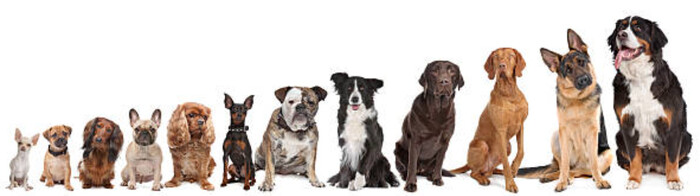
We all know that a Great Dane looks nothing like a Chihuahua, but what about their minds? A massive study from the University of Helsinki recently tested 1,002 dogs across 13 breeds to find out.
The researchers used a series of “puzzles” to measure things like memory, impulse control, and how well dogs read human body language. Use the following Breed-by-Breed Cheat Sheet to find the answers. The results show that while all dogs share basic logic, their “specialties” are hard-coded into their DNA.
The Breed-by-Breed Cheat Sheet
Based on the 2022 University of Helsinki Cognitive Study
| Breed | #1 Cognitive Strength | Potential Training Challenge |
| Belgian Malinois | Social Cognition: The “Valedictorian.” Best at gestures and spatial puzzles. | Low Impulse Control: Can be “reactive” or over-eager; needs help staying calm. |
| Border Collie | Inhibitory Control: Master of the “Wait.” Highest motor self-control. | Intensity: Their high focus can lead to obsessive behaviors if not channeled. |
| Australian Kelpie | Human Attunement: Incredibly responsive to gestures and body language. | Persistence: May give up on a difficult solo task quickly if you aren’t helping. |
| Golden Retriever | Cooperation: The “Partner.” Excellent at seeking help from humans. | Problem-Solving: Might wait for you to do it rather than trying to solve it alone. |
| Hovawart | Independence: Great at solo work and solving puzzles without help. | Autonomy: Less likely to “check in” or look to you for guidance in a crisis. |
| Australian Shepherd | Persistence: The “Tenacious” one. Won’t give up on a hard puzzle. | Impulse Control: Like the Malinois, they can act before thinking. |
| Labrador Retriever | Gesture Reading: Very good at understanding what your hands are telling them. | Inhibition: Often struggles with food-related impulses (the “food vacuum” effect). |
| Spanish Water Dog | Versatility: Ranked highly across logic and reasoning tasks. | Social Sensitivity: Can be wary of unfamiliar people/environments compared to Labs. |
| Shetland Sheepdog | The All-Rounder: Scored very evenly and consistently across almost all tests. | No “Super-Power”: They don’t have one extreme standout trait like the Border Collie. |
| German Shepherd | Logical Independence: Works well alone; great at navigating physical barriers. | Low Impulse Control: High-drive can lead to “lashing out” at tasks in frustration. |
| English Cocker Spaniel | Curiosity: High enthusiasm for exploring and investigating new smells. | Distractibility: That same curiosity can make them wander off-task. |
| Finnish Lapphund | Independent Spirit: Low reliance on human cues; happy to do their own thing. | Trainability: Because they don’t value human signals as much, they can seem “stubborn.” |
| Mixed Breeds | Inhibitory Control: Often better than purebreds at controlling impulses. | Social Reasoning: Scored lower on understanding complex human gestures. |
The Winners’ Circle: Who Excelled Where?
The study found that different breeds have vastly different “mental toolkits.” Here is how the top performers stacked up:
| If your dog is a… | They “Won” in… | What this looks like in your living room |
| Border Collie or Aussie Shepherd | Impulse Control | These dogs have the best “brakes.” They are the most likely to stop and think before they react to a squirrel or a treat. |
| Golden Retriever, Lab, or Kelpie | Reading Human Cues | These are the “Social Geniuses.” They stay “velcroed” to your hands and eyes, waiting for a signal or a gesture to tell them what to do next. |
| Belgian Malinois or German Shepherd | Independence | These are the “Solo Problem Solvers.” If a toy is stuck, they won’t look at you for help—they will spend ten minutes trying to figure it out on their own. |
| Australian Shepherd | Persistence | The “Never Give Up” award. The Aussie was the least likely to abandon a difficult task; they will keep trying long after other dogs quit. |
3 Key Discoveries for Dog Owners
-
“Brakes” are Breed-Specific
One of the most interesting tests was the Cylinder Test. Dogs had to resist the urge to lunge through a clear plastic tube to get a treat and instead walk around the side.
- Herding dogs (Border Collies/Aussies) were the masters of this. Their history of controlling sheep requires them to have a strong “brake system.”
- Working dogs (Malinois) were much more impulsive—they are bred for high-speed reaction, not necessarily for overthinking.
-
The “Ask for Help” Instinct
When faced with an impossible task (a locked treat box), Golden Retrievers were the first to turn around and look at their owners as if to say, “Can you help me with this?” In contrast, German Shepherds and Malinois were “lone wolves,” spending significantly more time trying to force the box open themselves.
-
Memory is the Great Equalizer
The study found no significant difference between breeds when it came to short-term memory or logical reasoning. Whether it’s a Kelpie or a Mixed Breed, most dogs are equally good at remembering where a treat was hidden or using the process of elimination to find a toy.
Training Tips Based on the Data
- For Independent Breeds (Malinois/GSD): Focus on building “partnership.” Since they are naturally inclined to work alone, reward them heavily for checking in with you and making eye contact.
- For High-Impulse Breeds: Practice “stay” and “wait” games. Their biology is set to Go, so they need extra help strengthening their mental “brakes.”
- For Social Breeds (Goldens/Labs): Use your body language! These dogs are geniuses at reading your gestures, so you can use very subtle hand signals to communicate.
Nature vs. Nurture
While training is vital, this study reminds us that we are working with a biological blueprint. A Malinois isn’t being “stubborn” when they act independently, they are doing precisely what they were bred to do for centuries. Understanding your dog’s breed-specific “mindset” is the fastest way to a better relationship.
Related Posts: