

 Ever heard of the term “Jump Down Syndrome”? Me neither, until my Aussie, Kiera (who was 12 at the time), jumped out of my car at the Vet’s for a routine checkup. That simple jump triggered the onset of Vestibular Disease, which she battled for the rest of her life. The irony of that moment—taking her in to keep her healthy and instead setting off something that would plague her to her death—still gets me.
My vet called it “Jump Down Syndrome.” It’s a non-medical way of describing injuries that can occur when dogs launch themselves from high places—cars, beds, porches—instead of getting down safely. Instead of waiting to be lifted or using pet stairs, they just leap.
If you are like me back then, and think nothing of your dog leaping out of a car or hopping off the couch, I’m going to ask you to start thinking differently. Sure, they land, shake it off, and saunter away like it’s nothing. But over time, those landings can quietly add up. Joints, muscles, and spines can only take so much before something gives.
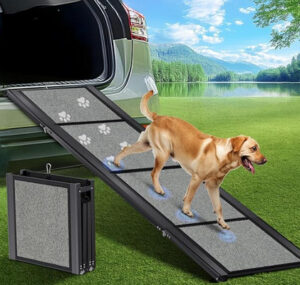
So, what made me think of this again, all these many years later? It’s time to get a new dog ramp for my car because the old one finally broke after 20 years. Here are the ramps I recommend.
Ramps That I Use and Love
If you’re shopping for ramps, here are a few reliable choices:
|
 |
 |
| For cars: Dog Ramp for Car – non-slip, foldable, and easy to store. | For beds: PetSafe CozyUp Bed Ramp – Long, gentle-slope ramp ideal for high beds. | For couches: Adjustable Dog Ramp – adjustable height, foldable, and also good for beds. |
Now, let’s talk about Jump Down Syndrome and take a look at what happens when your dog jumps down from a height.
When dogs leap from a height, all that force goes straight into their shoulders, elbows, wrists, hips, and spine. A young, fit dog might bounce back easily. An older or smaller dog, or one carrying extra weight, might not.
Common Injuries from Jumping Down
- Sprains and Strains: Damage to muscles, ligaments, or tendons, especially in the wrists (carpus), shoulders, or knees.
- Fractures: Broken bones, particularly in smaller or older dogs with fragile bones.
- Joint Injuries: Dislocation of joints or tearing of ligaments, such as cranial cruciate ligament (CCL) injuries in the knee, and worsening of arthritis or hip/elbow dysplasia
- Back and Spinal Injuries:Small dogs, and especially long-backed breeds like Dachshunds, are prone to spinal strain or disc issues, which can lead to pain or even paralysis in severe cases.
- Soft Tissue Trauma: Bruising and swelling in the paws, legs, or chest.
Why Some Dogs Are More at Risk
Certain dogs are more susceptible to “Jump Down” injuries:
- Small breeds: Short legs and fine bones make them more vulnerable.
- Senior dogs: Arthritis and bone loss make even small jumps risky.
- Overweight dogs: Extra pounds mean extra impact on every landing.
- Dogs with prior injuries: Old weaknesses are easy to re-injure.
Signs Your Dog Might Have Hurt Themselves
If your dog limps, moves stiffly, hesitates to climb stairs, or seems sore getting up, don’t assume it’s just “old age.” Even small changes in how they move or act can be early signs of pain. Dogs are experts at hiding discomfort, so it’s up to us to notice the little things.
How to Prevent Jump-Down Injuries
- Use ramps or steps. They’re worth every penny for cars, couches, and beds.
- Manage the environment and Train for patience. Block access to high furniture or teach them to wait for help.
- Teach an “off” cue. Use treats to guide calm, controlled descents.
- Lift when you can. Especially for small dogs or seniors.
- Keep nails trimmed and paw pads healthy. Better traction, safer landings.
- Build strength gently. Hill walks and swimming strengthen joints.
- Maintain a healthy weight. Less stress, longer mobility.
- Schedule regular checkups. Catch joint or bone issues early.
If Your Dog Gets Hurt
If your dog limps or shows signs of pain, limit activity right away and contact your vet. Early treatment, including rest, anti-inflammatory medication, or physical therapy, can prevent a minor strain from turning into a long-term injury.
Your dog might look like they’re built to jump and land with ease, but their joints tell a different story. Helping them down gently or providing a ramp is smart care that can spare years of wear and tear. A simple ramp can mean the difference between years of pain-free walks and preventable injury.
I bought the Squishmlets Dog Bed from [https://squishmallowsdogbed.com], and it’s easily one of the coziest, softest beds my pets have ever used. My cats jumped in right away and now spend most of their day curled up in it. Great quality, easy to clean, and absolutely worth it.
Hi Brylan, I don’t usually allow promotion in the comments, but I checked out your beds and they look like they’re good quality and look fun. So if anybody’s looking for a dog bed, check out Brylan’s link above.