

We’ve had Great Blue Herons visiting our pond for decades. Seeing this pose is a first.
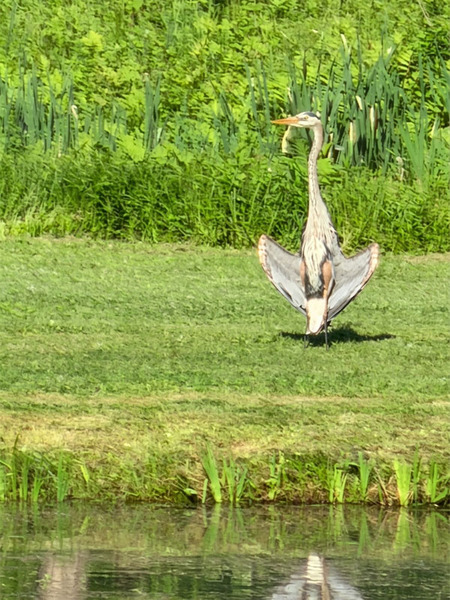
This pose is known as “horning” or sun-baking (often referred to by birders as the delta wing pose).
While it looks like it might be trying to do a yoga stretch or impersonate a dragon, I discovered there are a few practical reasons behind this striking behavior:
1. Thermoregulation (Sunbathing)
On cooler mornings or after spending time in cold water hunting for fish, herons will spread their wings wide to maximize their surface area. By facing the sun and exposing the dark skin and feathers beneath their wings, they can absorb heat rapidly to warm up.
2. Drying Off
Herons spend a lot of time wading in water. If their feathers get damp from a plunge or from heavy morning dew, they will spread them out like a clothesline to let the air and sun dry them. Keeping feathers dry is necessary for flight efficiency and temperature control.
3. Parasite Control
The intense heat from the direct sunlight helps drive out mites, lice, and other ticks that hide deep within their feathers. The UV rays can also help bake off bacteria and fungus, keeping their plumage healthy.
When they do this, they will often hold completely still for several minutes at a time, looking like a living statue until they suddenly fold up and walk away.
That odd, apron-like “flap” hanging right in the center of its chest is actually a dense bundle of shaggy breast feathers (they are called pectoral plumes).
When a heron stands normally, its long neck is folded tightly into an “S” shape against its body, and these long, wispy chest feathers blend seamlessly into its front.
When they strike this specific sun-baking pose, two things happen that create that strange optical illusion:
The Neck Stretches Up: By pulling its neck straight up and throwing its shoulders back, the skin and feathers on the chest are pulled taut.
The Wings Separate: As the wings pull away from the body, it isolates that center strip of chest plumage. Because the feathers are long and shaggy, gravity pulls them downward, making them look exactly like a hanging fabric flap or an apron.
Related Posts: